Lindy Hop – history and links

Lindy Hop is a Black, African-American dance, born in Harlem to the music of the great swing bands. When you dance it, you dance with its history – here it is, told briefly.

New York · Savoy Ballroom · late 1920s

Born in Harlem

Jazz, the still-young music of African Americans, was reaching a high point: great big bands played swing, and Duke Ellington, Count Basie and Louis Armstrong became famous. At the Savoy Ballroom in Harlem, Black and white dancers shared the same dance floor – a small island of encounter in the otherwise racist America of the time.

In this melting pot of dance cultures a new dance was born: dynamic, groovy, with lots of freedom to improvise for both partners. Rooted in African dance, influenced by the European partner-dance tradition, with elements of tap and Charleston – but far looser and more unconventional. According to the popular story, it was named after Charles Lindbergh’s transatlantic flight in 1927, when the newspapers ran the headline “Lindy hops the Atlantic”.

The Savoy was a ballroom where everyone was welcome – at a time when many famous clubs turned Black guests away while Black artists performed on their stages. Lindy Hop belongs to that dance floor, not to the show stages of segregation.

The 1930s

Frankie Manning, Norma Miller and Whitey’s Lindy Hoppers

In the 1930s outstanding Black dancers shaped Lindy Hop – above all Whitey’s Lindy Hoppers with Frankie Manning and Norma Miller. They became famous for their wild energy, their musicality and their spectacular air steps. You can see them in many old film recordings, most legendary of all in the feature film “Hellzapoppin’”.

Many white dancers took up swing dancing too – one of the greats was Dean Collins, who shaped the Hollywood style in the western USA.

Solo, silence, revival

Dancing solo

Even though Lindy Hop is a partner dance, all the great dancers of the time also danced solo. Today we call this style Authentic Jazz or Solo Jazz. Alongside famous routines such as the Shim Sham and the Big Apple, which are still danced at parties today, there was above all a lot of – crazy – improvisation.

The end of the swing era

After the Second World War the swing era came to an end. Musically, bebop now took centre stage, and it was less suited to dancing. Boogie-woogie, jive, rock ’n’ roll and West Coast Swing followed in Lindy Hop’s footsteps.

The great revival

In the 1980s came the revival: swing dancing conquered Europe and America a second time. Young enthusiasts copied the old film clips, the legendary show group Rhythm Hot Shots formed in Sweden, and the dance camp in Herräng was founded – still the biggest in the world. Frankie Manning was rediscovered and passed his art on to the young generation; Norma Miller, even in her nineties, inspired generations of Lindy Hoppers with her musical energy.

Today

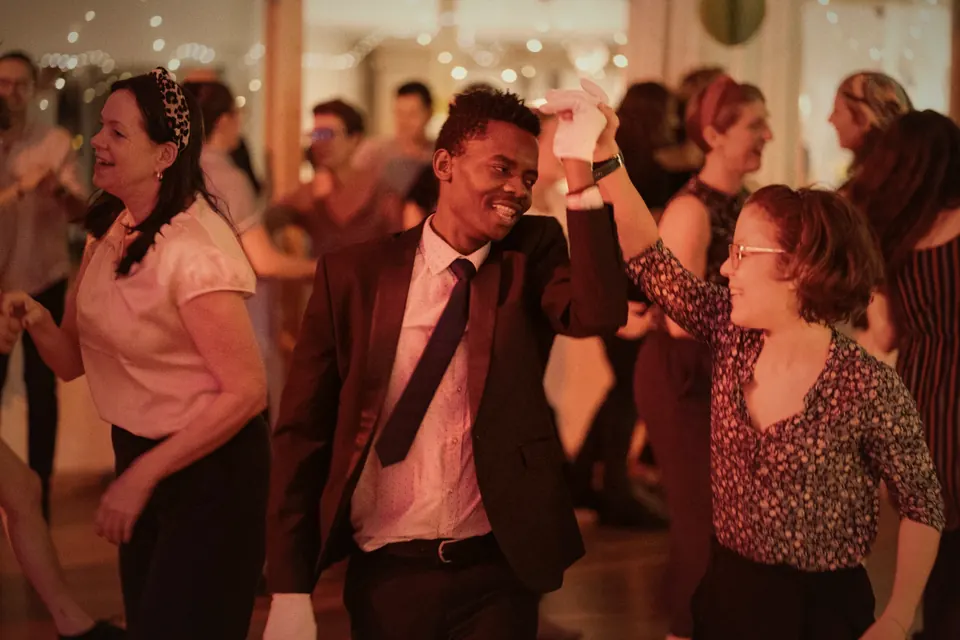
Today Lindy Hop is danced in many countries, and the scene is lively and always on the move. Lindy Hop is a social dance: joy of life and a love of experimenting are at its heart, and in classes and at dance nights everyone dances with everyone. Freiburg has plenty of dance parties and, like many European cities, international workshops and festivals – if you like to travel, you’ll soon feel part of the worldwide swing community.

This history comes with a responsibility: why we stand in solidarity with Black Lives Matter.
To watch, listen to and travel to