Dance styles

Six dances, one family: they all grew up with jazz and swing – music created by African Americans. Here you can find out how they feel and where they come from.

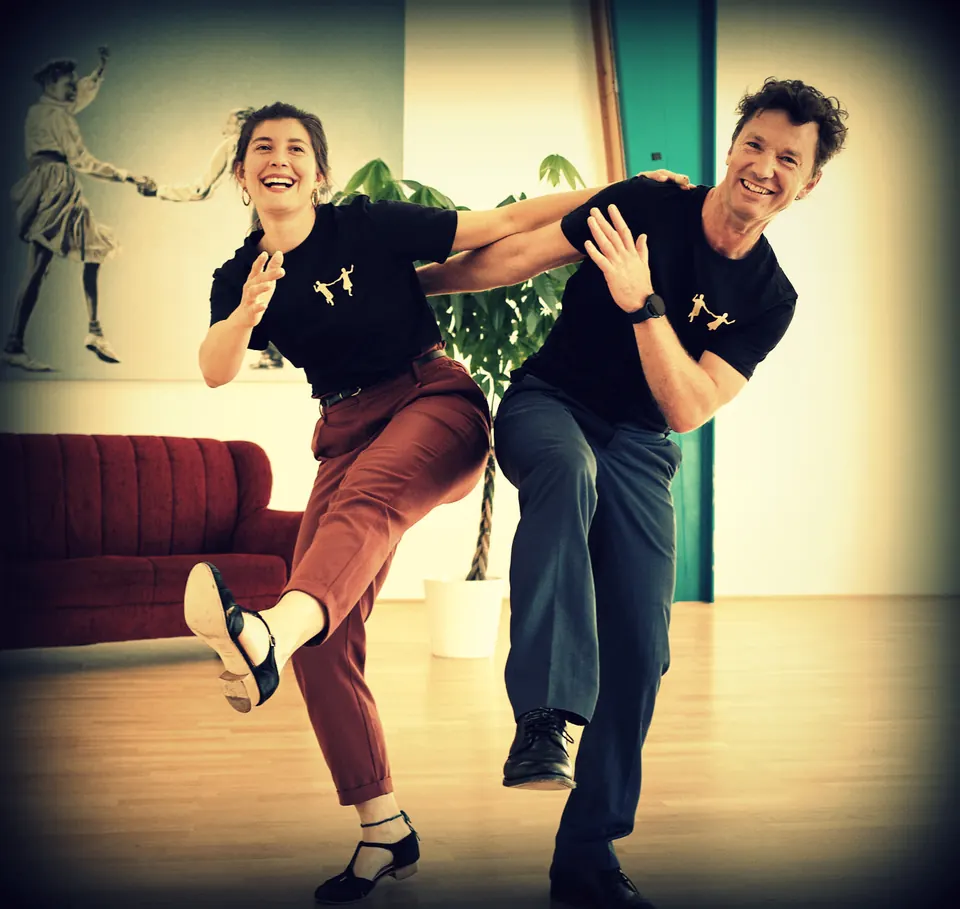
Swing-out in the studio: a couple at arm’s length, she is laughing
Harlem, from 1928

Lindy Hop

The dance of the Black community in the ballrooms of Harlem. Groovy, crazy, intuitive and creative, full of energy.

From 1928 into the 1940s this hugely popular dance was a melting pot of many influences: jazz music, African and Afro-Cuban dance cultures, tap, Charleston and European partner dancing.

Lindy Hop is danced a lot in open position. Both partners have plenty of freedom to dive into the music and turn the dance into a lively conversation. It is danced at every tempo, from slow to very fast – and in the faster songs partner Charleston takes up a lot of space.

In the Basics classes you get to know the music and the feeling, the basic steps and how to feel comfortable with your partner. The further you go, the more it is about technique and a good partner connection.

Back then: Whitey’s Lindy Hoppers in the famous scene from “Hellzapoppin’”
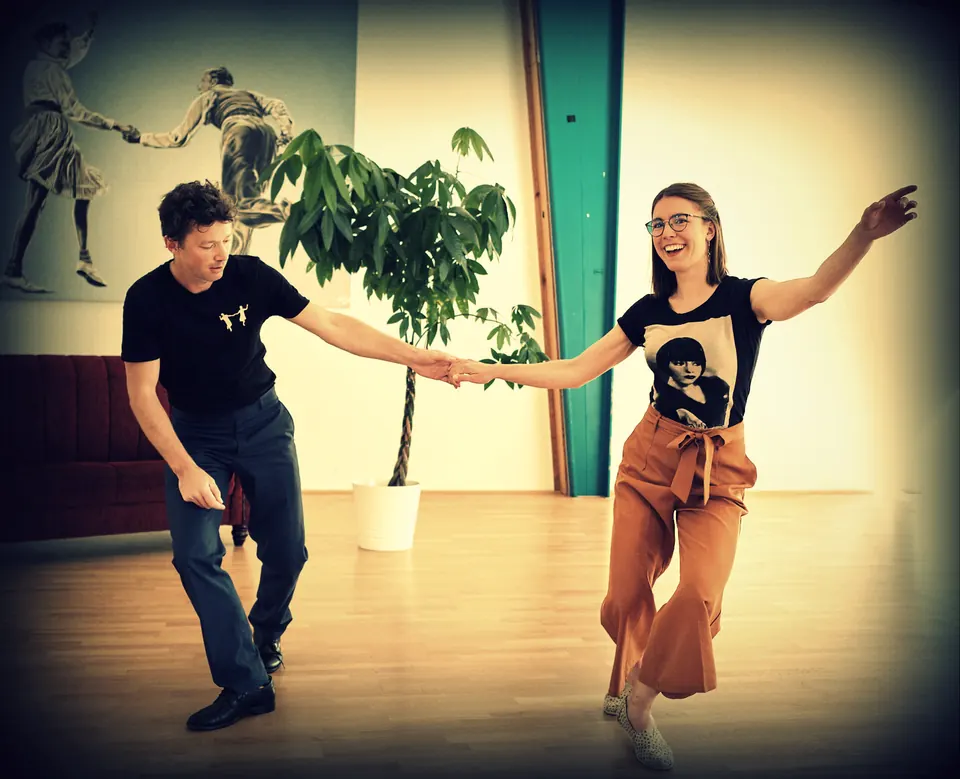
Today: Lindy Hop demo by Anders and Mimi

At our school Steve teaches most of the Lindy Hop classes, together with Nina, Lidia and Astrid. Fernando and Moni take care of good technique, and Georg and Kirstin challenge the advanced dancers.

The Carolinas

Collegiate Shag

A high-energy dance from the swing family with virtuoso footwork: lots of kicks and hops – and the characteristic index finger pointing upwards.

Shag is mostly danced in closed position, at medium to fast tempos. The basic is a 6-count (slow, slow, quick, quick). Collegiate Shag was born among the Black population of the Carolinas and spread from there across the USA. Thanks to its dynamics it was especially popular with (white) college students – hence the name “Collegiate” Shag.

Back then: a dance scene from 1937 (Harvest Moon Dance Contest)
Today: Collegiate Shag demo by Stephen and Chanzie

At our school Piret, Esteban and Maria teach the Shag classes.

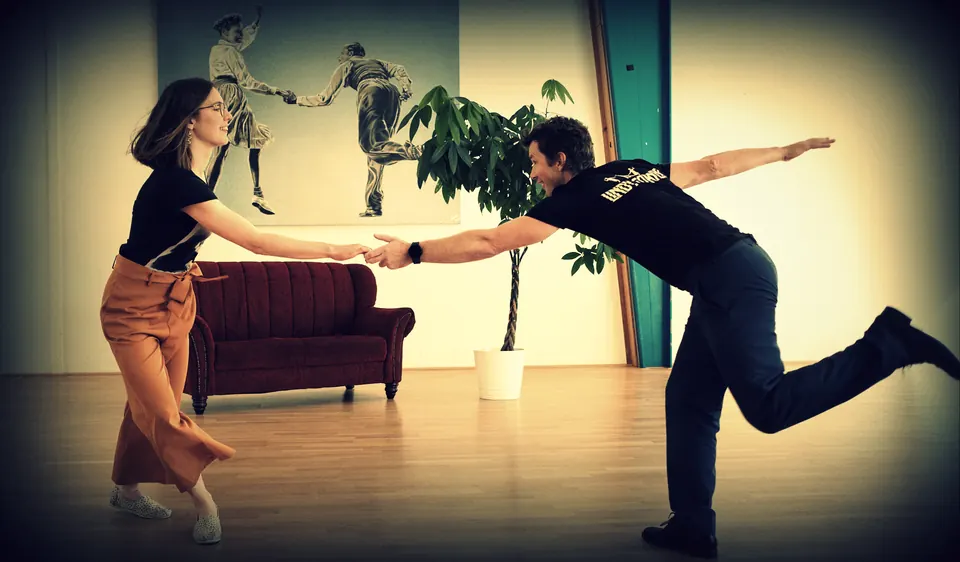
A couple dance in the studio, he leans far forward and kicks back
Slow dance

Blues

Blues is danced to slow and medium-tempo blues music and to slow swing, solo or with a partner. As a couple it is often danced in close embrace with a lot of connection – and yet improvisation and personal expression play a big part. What matters is rhythm and groove, good quality of movement, the ability to relax and clarity from both dancers.

Dive into the world of slow dancing – you’ll leave the studio deeply relaxed.

Back then: blues dancers in the 1930s (documentary “The Spirit Moves”)
Today: blues dancers at Bluesila or the blues demo by Gaz and Alba

At our school Kirstin, Fernando, Robin and Phillip teach Blues.
California

Balboa

Balboa was hugely popular in California in the 1920s and 30s. It is danced to medium and fast swing – exactly where Lindy Hop starts to get tiring. With Balboa you stay relaxed and sweat-free and cope well even on crowded dance floors, thanks to small footwork, economical, precise movements, short distances and a lot of close embrace.

Balboa is wonderfully elegant, and it blends smoothly with Lindy Hop.

Back then: Hal and Betty Takier
Today: Balboa demo by Anders and Olga

At our school Fernando and Maren teach Balboa.

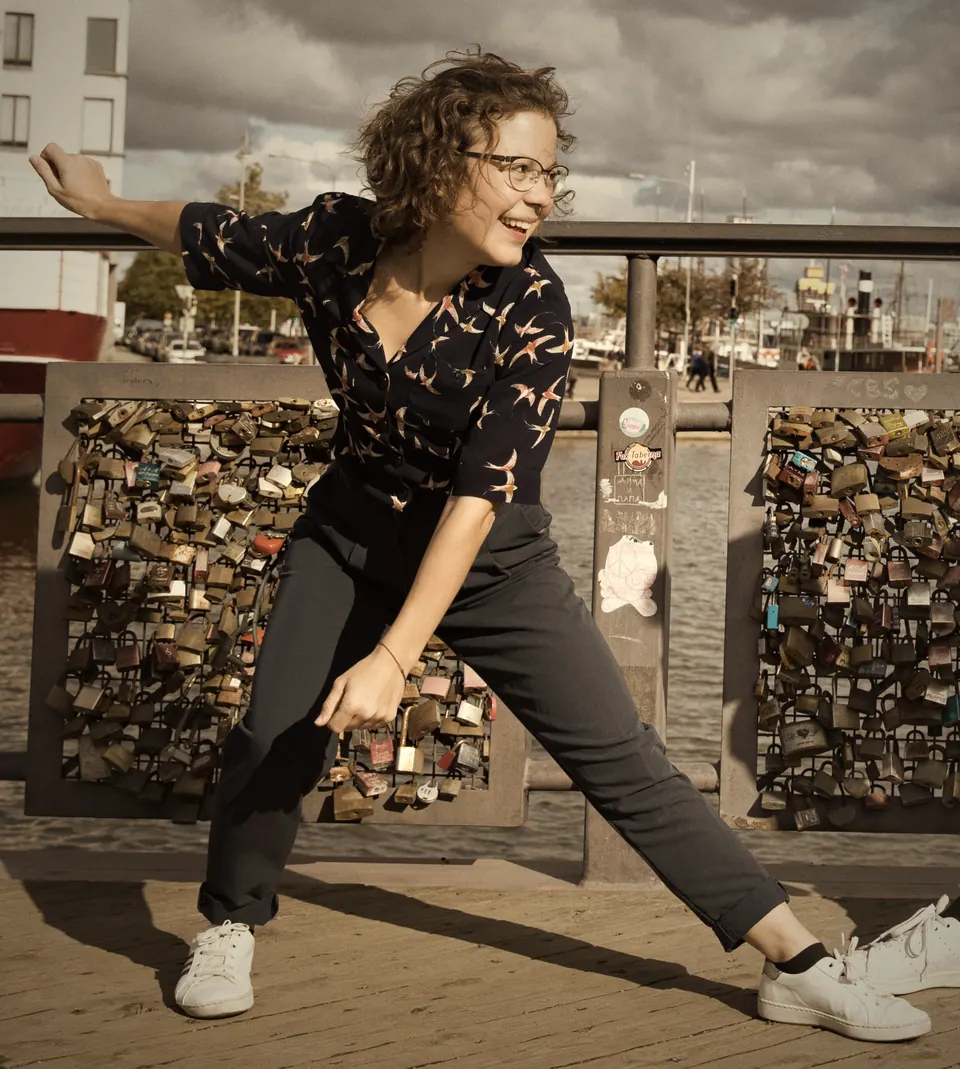
Maren in a solo jazz pose in front of a railing full of love locks at the harbour
Authentic Jazz

Solo Jazz

People have always danced solo to swing, too.

Vernacular jazz dance – today often called Solo Jazz or Authentic Jazz – shares its roots with Lindy Hop: the grounded, groovy movements of African dance are still clearly visible, as are the influences of tap and Charleston.

Some classic routines such as the Shim Sham and the Big Apple are still danced all over the world. But just as in the music, improvisation and personal variation are an important part of the dance.

Back then: Al Minns and Leon James
Today: Big Apple by the Harlem Hot Shots

Our Solo Jazz class is taught by Steve.

The 1920s

Charleston

Charleston was born in the African-American community in the 1920s and quickly became popular with white Americans too.

It was danced solo and in couples to the music of the same name, including by two women together. Josephine Baker became world-famous with her highly virtuosic, extremely theatrical performances. Typical are kicks and taps and the twisting legs so characteristic of the 1920s.

In the 1930s Charleston became part of Lindy Hop and was now danced to swing music – still both solo and in couples. While the posture of the 1920s was rather upright and European, the low, grounded posture typical of Lindy Hop now took over. There is a lot of kicking, and the variations are almost endless.

Back then: Josephine Baker (1920s) and Al Minns and Leon James (1930s)
Today: Solo Charleston show by the Harlem Hot Shots

A couple in the studio kick one leg high at the same time and laugh at the camera

Feel like trying?

The timetable shows every class in the current term. And if you want to know more about the roots, read on in our Lindy Hop history.